Viacom
A display you can see through
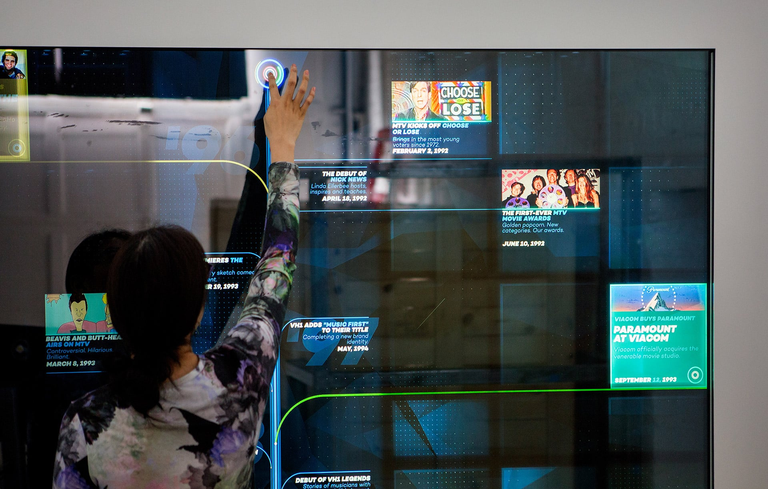
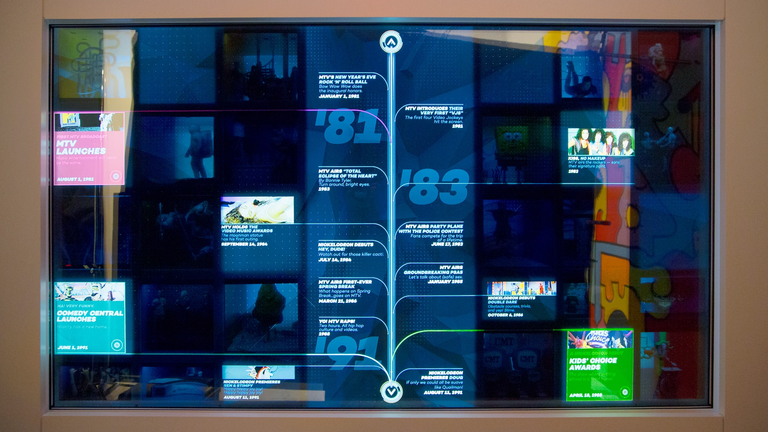
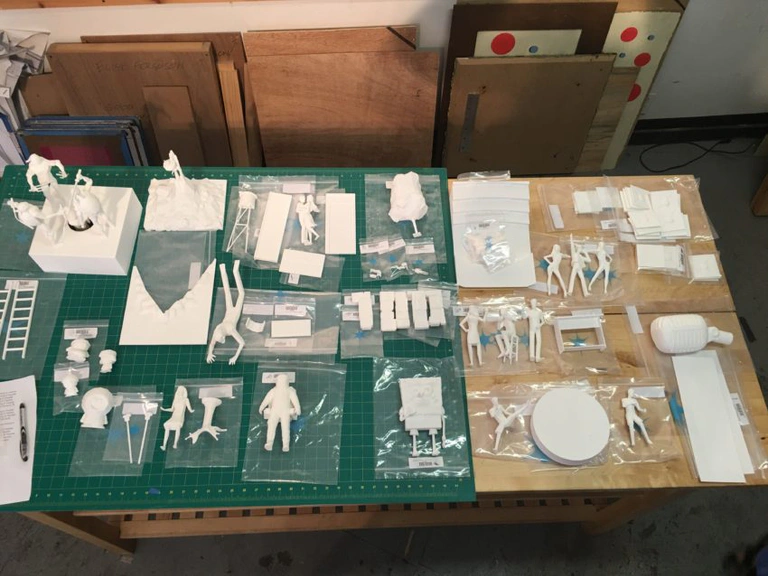
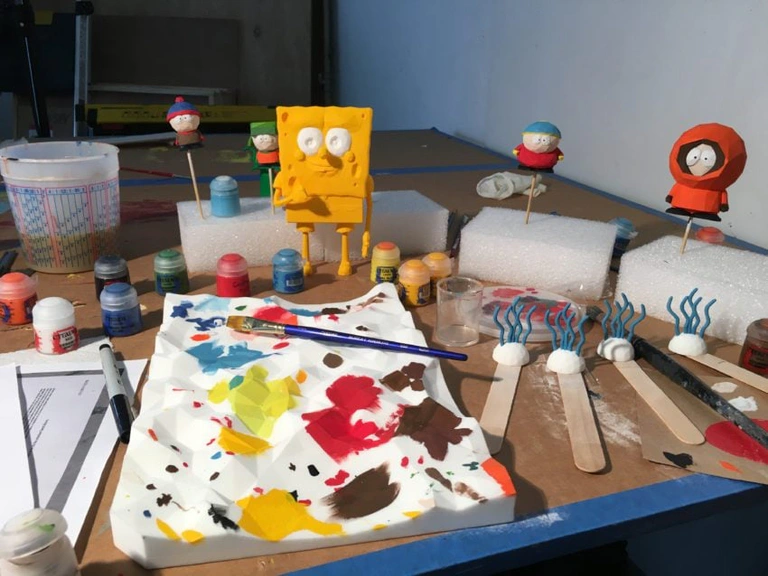
Viacom bought a huge transparent display for the floor where it brings partners and talent, then asked what should go in it. It became the company's history, told in painted models and 3D prints behind the glass, with the digital layer playing against them so things appear and disappear as you look.
Paper first
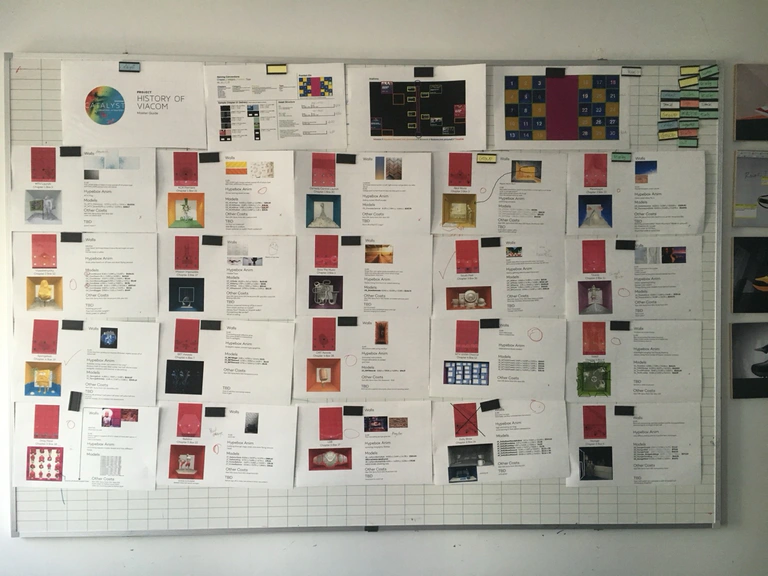
The first problem wasn't hardware. A company's history doesn't run in a straight line, and every network had its own version of it. We put the story on a wall in paper sheets held by magnets, so the networks could work through what belonged before anything was built. The wall became six chapters and twenty moments, each chapter with its own colour, and a timeline to give visitors a route through.
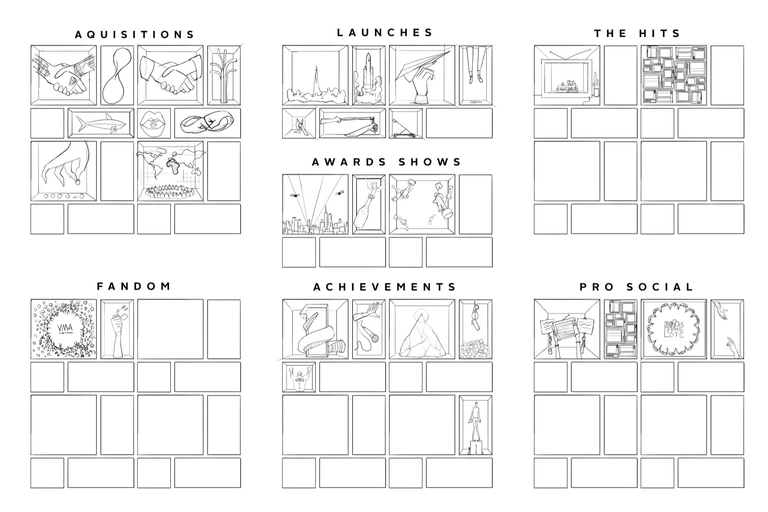
A foamcore replica first
The small demo units couldn't tell us anything about scale. So we built a life-size foamcore replica of the box and printed the design at full size, to check that it could be read and reached at the real size. Maquettes then checked how a physical object and the picture in front of it would share one line of sight. Each compartment got its own notes for the model, the paint and the animation.
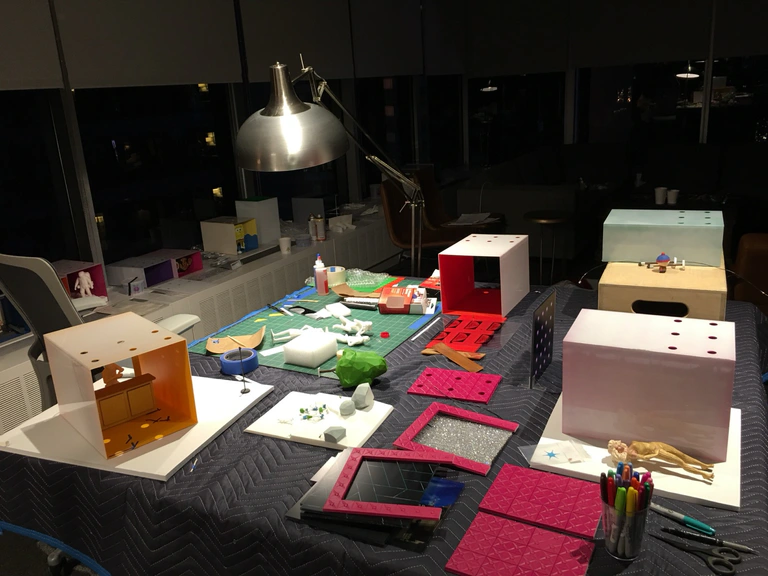
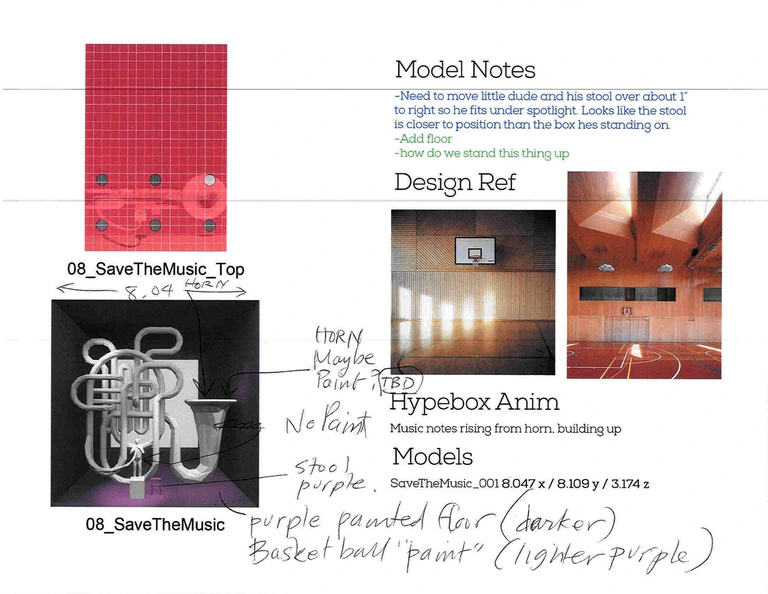
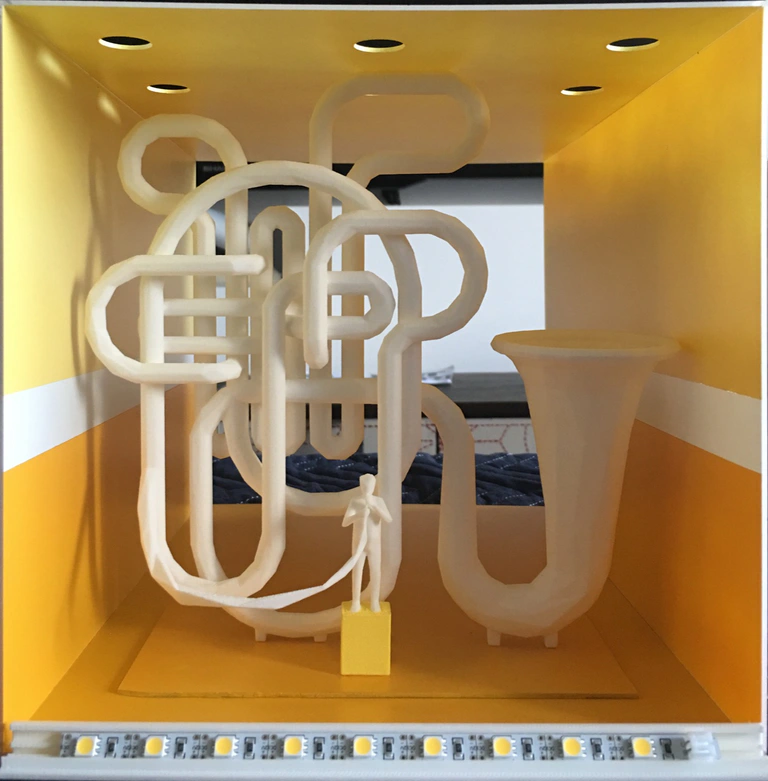
Built by hand
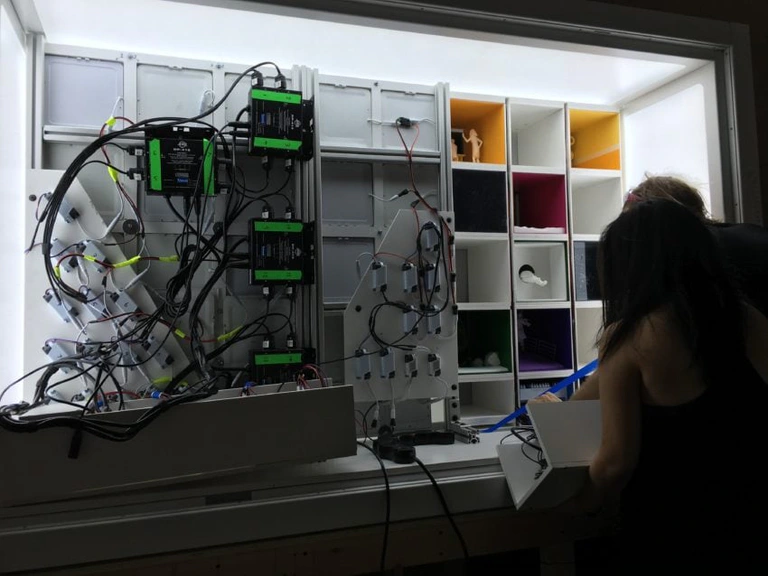
Then came the people to build it: animators, model makers, painters, fabricators. I filled the gaps: modeled parts, wrote the interaction, and when the lighting looked wrong after the first demos, built an LED rig in the middle of the install, down to making the holders and soldering the controls.
Installed
It went in, and it worked. The display was hardware Viacom bought. The experience around it was the work.